
ServicesRegenerative, soil-first grounds management, from first test to measured results
Every campus starts in a different place, but every plan we build is grounded in organic practices and measured through soil biology. You might be installing a landscape around a new construction project, updating an IPM policy, cutting pesticide liability, or trying to get control of input costs. I meet you where you are and work with your team, not around it.
We're independent advisors, not a contractor or product supplier, so our recommendations aren't tied to anything we sell. We don't just replace products. For long-term success, we support the whole ecosystem from the soil up, putting the processes that have evolved in your local environment to work so your existing efforts go further with fewer inputs.
What I work on: lawns and quads · athletic fields · gardens and beds · meadows · trees · edible and medicinal plantings and orchards
Services1. Observe: Where are you now?
A biological soil analysis across growing zones throughout your campus: lawns, fields, gardens, around trees, and more. A look at what’s actually living in your soil quickly shows whether it’s healthy, compacted, or anaerobic, and which plants will thrive there.
Site pressures: sun, wind, salt, drought, and foot, vehicle, event, and animal traffic
Review of your IPM policy and day-to-day practices: irrigation, fertilization, pest and weed management, and green waste and compost availability and utilization
Conversations with grounds, facilities, and sustainability staff about goals and constraints
You get: a plain-language soil and landscape health report with a clear starting point and the biggest opportunities.
Services2. Design: Where do you want to go?
A phased transition roadmap that supports soil biology and plant establishment, built around the outcomes you name
Cultural practices, product protocols, IPM strategies that put observation and prevention first, and a maintenance calendar
The right expectation for each area, with labor, inputs, and water matched to it
Design of new or renovated spaces, coordinated with your landscape architects and installation contractors, so new plantings go into living soil
Options for on-campus composting, native plantings and meadows, and lower-maintenance landscapes
You get: a roadmap your team can follow and your leadership can approve.
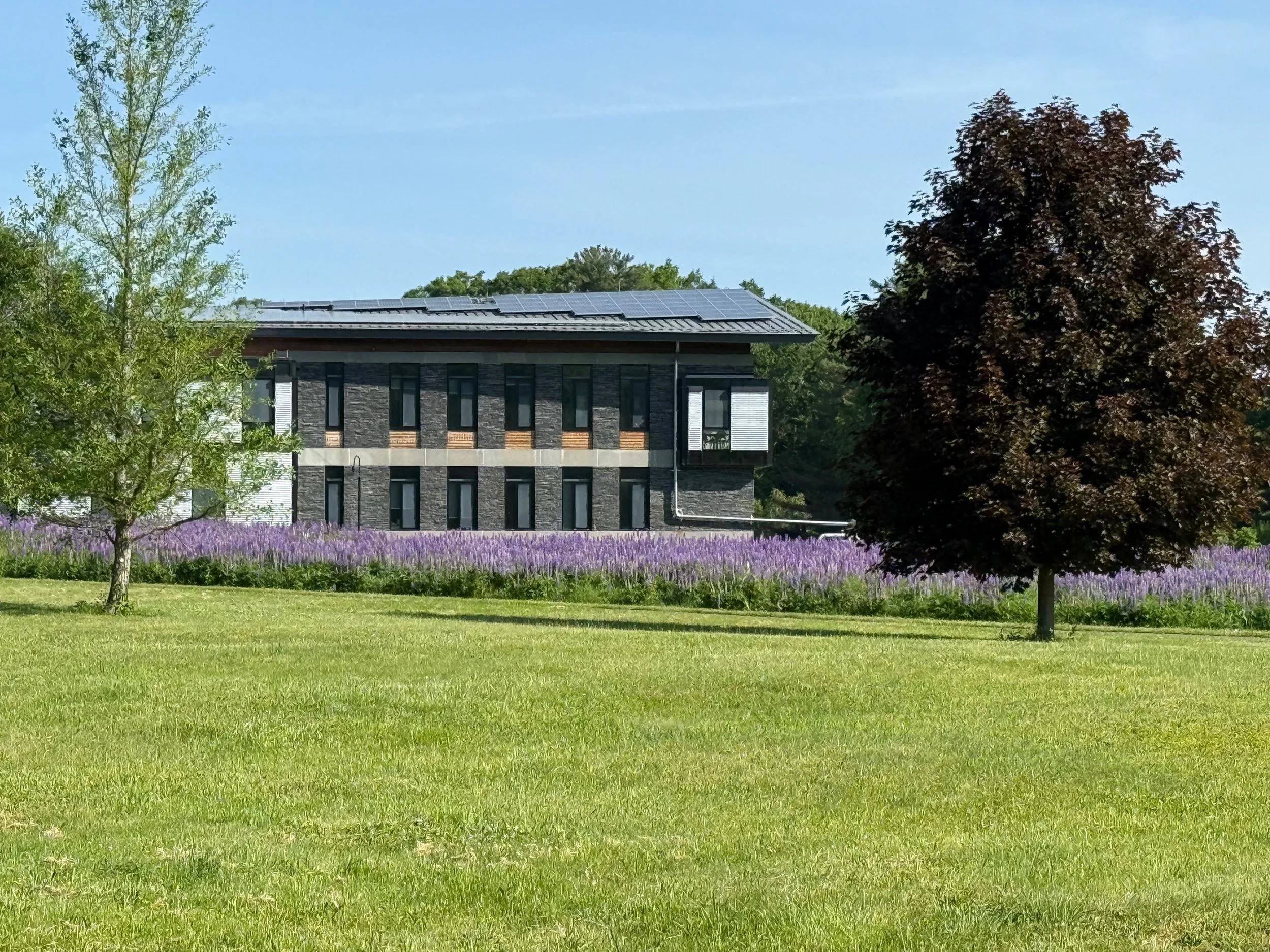
Hampshire College grounds
Services3. Educate: Bring your people along
Hands-on workshops for grounds staff, contractors, and stakeholders, covering how the work is done and why it's changing
Training in soil biology, organic practices, and compaction: causes, symptoms, and fixes
You get: a crew that understands the practices and owns them.
Services4. Assist: Through the transition, and after
Seasonal follow-up visits to re-examine lawns and plantings and retest the soil
Baselines and metrics set up front, with progress reports on irrigation, inputs, turf quality, and resilience
Adjustments as conditions change, with email and phone support between visits
Annual support arrangements available
You get: steady progress and numbers you can show your leadership.
Services5. Lead: Show what's possible
Case studies that document your results
Campus engagement with students, faculty, and administration, including living-laboratory links to coursework and research
Help telling your story to leadership, students, families, and the community
Data to support your sustainability reporting, such as AASHE STARS, and future grant applications
You get: recognition as a campus that shows what's possible, now and for the students who will lead next.
ServicesWho this is for
Colleges and universities, K–12 schools and districts, and boarding schools and academies
Facilities and grounds leaders working on a new landscape installation, building construction, or campus master plan
Teams that want better field and lawn appearance and faster recovery
Schools responding to parent and athlete concerns about pesticide exposure
Institutions looking to cut pesticide liability or facing new state or local pesticide rules
Budget owners trying to stabilize input costs
Sustainability offices pursuing STARS credits, Re:wild Your Campus certification, or climate goals
Campuses responding to students who increasingly choose schools that put green practices into action
Parks, cemeteries, places of worship, and private estates
Frequently asked questions
-
It's a great start, and it's the roadmap to build on. Many IPM programs still run on an applicator mentality, reacting to pests and trying to control nature. A soil-based approach prevents most pest and weed pressure in the first place. Healthy plants leave fewer weak spots for weeds and fewer open infection sites for pathogens. Supporting soil health is a proven nature-based strategy that provides a proactive approach to minimizing pest pressures.
-
Yes, if it's built on soil health. I managed grounds for UC Berkeley's Recreational Sports Department for ten years. My grant-funded organic turf research project there showed improved texture, density, color, uniformity, traffic tolerance, and shear strength, plus a 22% reduction in irrigation over two years of monitoring.
-
Most landscapes transition in about two to three years. Spaces with recurring disturbances, such as heavily used athletic fields, may take longer. A phased approach keeps your campus looking good the whole way.
-
Weed pressure should decrease over the course of the project. However, not every area needs the same standard. A showcase lawn and a back meadow call for different expectations and different levels of effort. Together we set the right expectation for each site, then match labor, inputs, and water to it. That's how a transition avoids surprise weed surges and budget overruns.
-
The aim is fewer inputs over time: less irrigation, fewer synthetic products, fewer replantings as fewer plants die or decline, and more predictable costs. Early phases may shift spending toward soil testing, compost, and training. Your roadmap will spell this out up front.
-
No. We work alongside your team and train them so the practices stick.
-
No. We're independent, so our recommendations aren't tied to any product or contractor.
-
Yes. I'm based in Western Massachusetts and work in person across the country and in Canada, as well as through remote consultations and ongoing support.
-
Yes. Measurement is built into every engagement. We’ve written and won grants for this work, including a 2024 Massachusetts Healthy Soils Challenge Grant and the Berkeley organic turf research project.
-
It depends on campus size, scope, and how much on-site time you want. After a 20-minute call I'll send a clear, itemized written proposal. For new landscapes and building projects, protecting the soil from the start helps avoid the cost of replacing plants lost to transplant shock. A visibly healthy campus also strengthens your sustainability story with prospective students.