
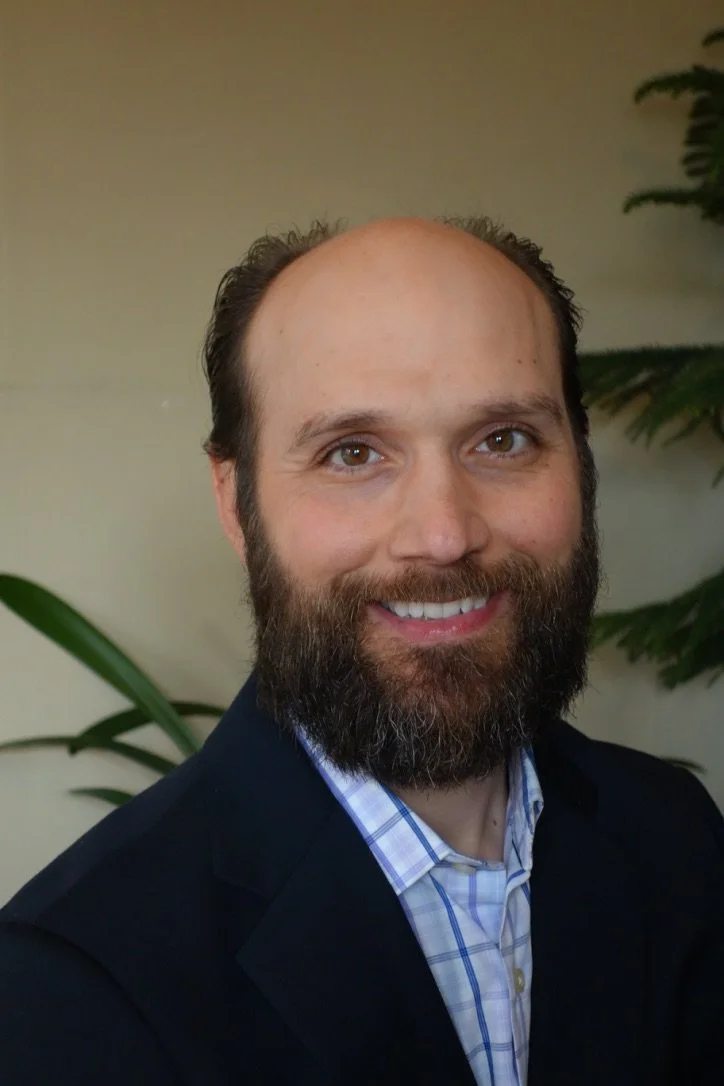
Hi, I'm James Sanner.
I have 20+ years in grounds and land management, 15+ of them leading campus grounds. I didn’t start out organic. I began my career working on premier golf courses, including helping prepare the greens at Saucon Valley Country Club for the 2009 U.S. Women’s Open, and for years I supported heavy pesticide applications. That work gave me a critical eye for how a landscape should look and perform. It also showed me what an “applicator mentality” costs the health of the soil and the ecosystem.
At UC Berkeley, where I spent ten years as Recreational Sports Grounds Manager, I set out to meet the same standards organically. I authored a grant-funded organic turf research project that delivered significant turf improvements while reducing irrigation needs by 22%. I also wrote the Berkeley Compost Project plan and turned a degraded, unused site into a one-acre food forest, which earned the 2015 Chancellor’s Outstanding Staff Award.
Since then I’ve managed a 400-acre retreat campus at the Insight Meditation Society and led organic grounds and land management at Hampshire College. There, all 815 acres are managed without synthetic pesticides or fertilizers, and the college earned Platinum certification from Re:wild Your Campus. In 2024 I won a Massachusetts Healthy Soils Challenge Grant to study how campus lawns can store more carbon. In 2026 I spoke at the AASHE national conference on soil biology and regenerative grounds management.
I started Green Campus Consulting to help more campuses make this shift with confidence. People have been managing land this way for a long time. My job is to help your team start with soil, work with nature instead of against it, and measure the results.
What good stewardship means to me
What does it mean to be a good steward of a piece of land? Is it just reducing harm, or creating real benefit: more carbon in the soil, more functional diversity, and landscapes that thrive for generations? A campus can be accessible, beautiful, and culturally rich, but those qualities should be the starting point, not the ultimate measure of success. The question I bring to every campus is simple: what are we doing to support this living ecosystem we're all part of?
How I work with you
Everyone on your team is an expert on the parts of campus they care about. I start by listening: what you want more of, what you want less of, and what success looks like for you, your leadership, and your students. Then I lay out clear options with honest trade-offs on timeline, disruption, cost, appearance, access, and sustainability.
Why work with me
Independent advice. I'm not a contractor or product supplier, so my recommendations aren't tied to anything I sell.
Based in soil science. I build up your soil food web so soil biology does the work of keeping your landscape healthy.
Campus landscape specialist. 15+ years leading grounds on campuses means I understand events, athletics, budgets, and stakeholders, not just plants.
Measured, reportable results. Baselines and metrics are set from day one.
Stability and predictability. Using nature to reduce pest pressure and input costs.
Recognition and speaking
2015 Chancellor’s Outstanding Staff Award, UC Berkeley
Re:wild Your Campus Green Grounds Certification, Platinum, Hampshire College (as grounds lead)
AASHE 2026 presentations:
Soil Biology: The Reason Why We Are Here
Your IPM Program Is a Roadmap for Managing Your Campus Organically
Subject expert and moderator, Herbicide-Free Organic Landscape panel, CHES 2019
Fellowship, UC Berkeley Graduate School of Landscape Architecture
Guest lecturer: UC Berkeley College of Natural Resources, Hampshire College, Merritt College
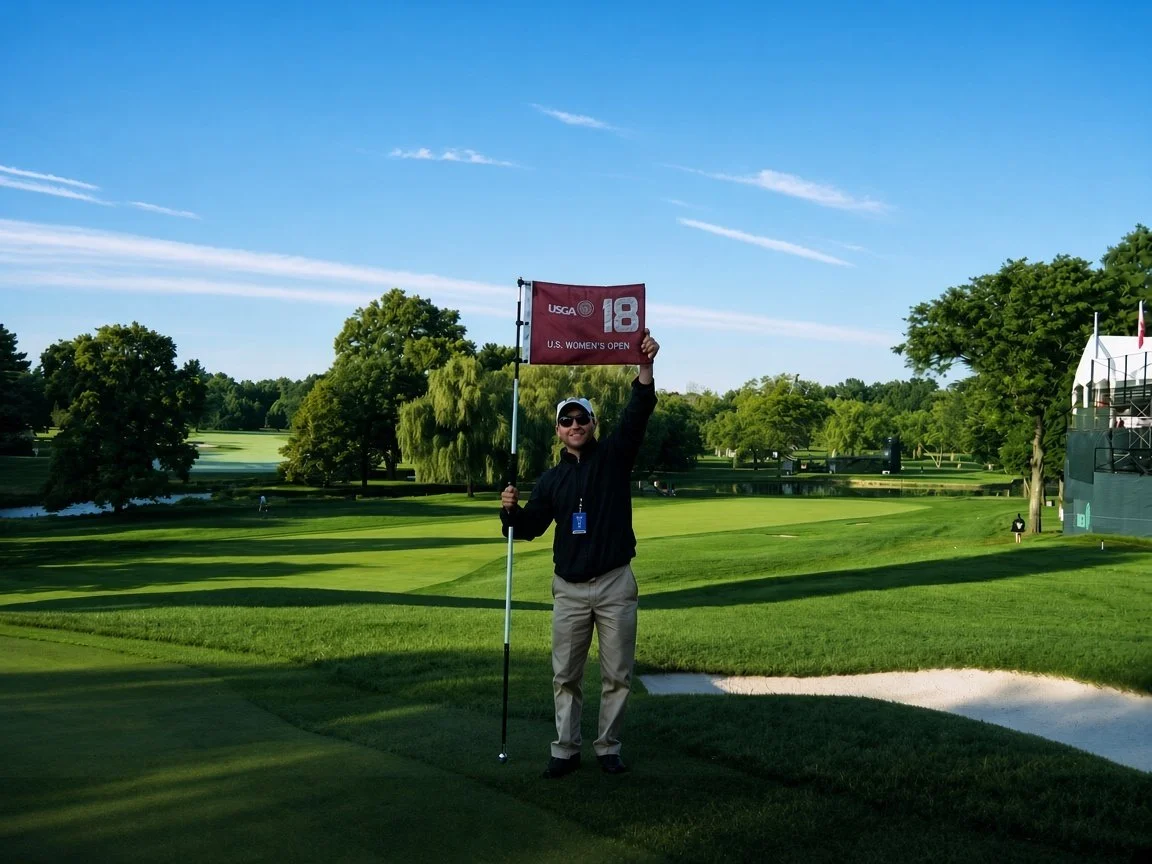
Preparing greens at the 2009 U.S. Women’s Open, Saucon Valley Country Club
Training and education
B.A. in Psychology, Washington & Jefferson College (2002)
M.A. in Philosophy (bioethics), Kent State University (2007)
Landscape Horticulture coursework, Merritt College (2014–2016)
Certified Compost Production Technician, University of Maine (2016)
Certified Permaculture Designer, Occidental Arts & Ecology Center (2018)
Yale University program in Tropical Forest Landscape Conservation, Restoration and Sustainable Use (2021)
UMass Winter School for Turf Professionals (2024)
Trained irrigation auditor
Coming soon: Eco-Dissonance
I'm writing a book, Eco-Dissonance. It picks up where Rachel Carson's Silent Spring left off. Poisons in the environment harm far more than their targets, but the reverse is also true: when we help the landscapes around us thrive, the benefits cascade, from the soil to the air we breathe and the food we eat.